What Has Psychology Ever Done For Me?
 Members of the Shiplake College Sixth Form Society have introduced a new series of talks exploring various subjects offered by the College at A-Level. These provide a valuable opportunity for pupils to broaden their understanding of a topic, and also allow pupils in Year 11 to make more informed decisions about their options for the future.
First in the series was Psychology. Head of department Mr Ebbage delivered an enthralling lecture titled ‘What has Psychology ever done for me?’, highlighting how the subject is relevant to absolutely everyone. As a communicative species, humans naturally think and speak about what other humans say and do. This means that everyone is an amateur psychologist!
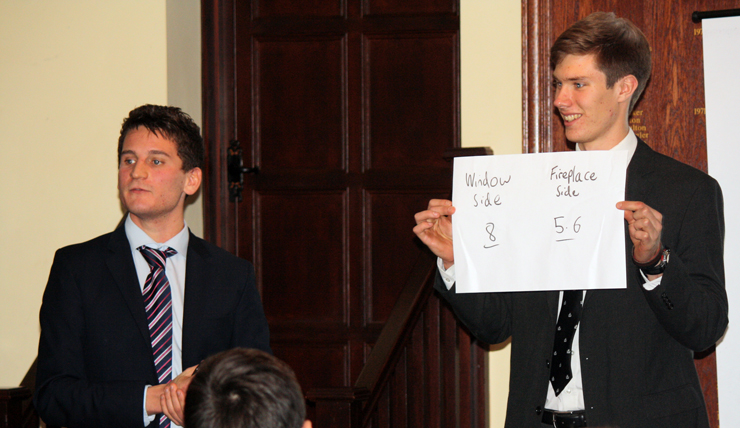
Society member Max Hearnden introduced the talk and welcomed current Psychology students as well as Year 11 pupils from Shiplake and other schools considering it as an A-level subject. The experiments started as soon as the guests took their seats. Those on the left (window side) of the room took a cookie from a container with barely any remaining, whereas those on the right (fireplace side) received a cookie from a full box. Both groups were asked to rate the cookies on taste. Those who took cookies from the emptier container appreciated the taste more, as the item appeared more valuable.
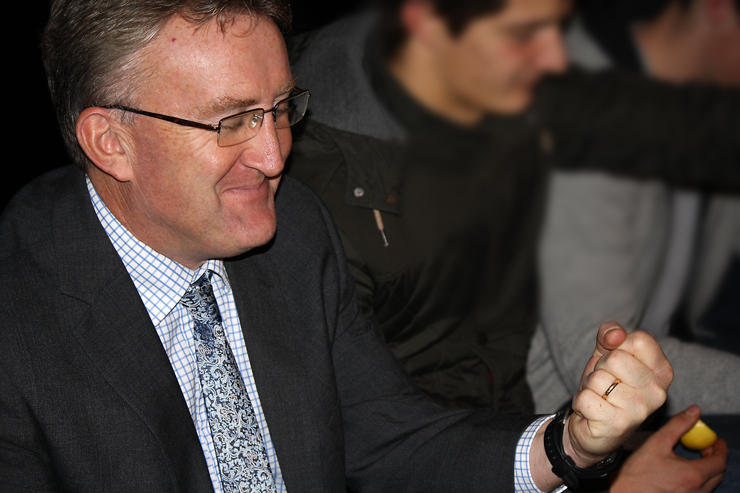 In addition to this ambitious live experiment; Mr Ebbage presented key previous research, as well as interesting contemporary studies, outlining how Psychology is applicable to the everyday lives of young people. He particularly focussed on how Psychology affects academic pursuits, sport and relationships. The importance of avoiding distractions and using rewards during revision was verified with scientific evidence. Classical conditioning was a particularly popular topic with the audience. It was demonstrated how with sufficient practice, the smell of lemons can be used to elicit a positive mindset. As a result, it is argued that this technique could help to improve exam performance. The kitchen staff have subsequently been warned to expect a huge demand for the fruit in the summer!
The success of the Team GB Cycling team was then used to emphasise the crucial role of psychology in sport. The ‘aggregation of marginal gains’ theory explains how minor improvements can accumulate over time to make a crucial difference in competition. The cyclists attended hand-washing seminars in order to minimise the chances of falling ill and missing training. In elite sport, the margins between success and failure are incredibly small. An extra day of training saved by hygiene safety could be all that separates the frontrunners at the finish line.
All those who attended gained a fascinating insight into how Psychology affects the ‘real world’. It is hoped this will further energise their enthusiasm for the subject. Many other teachers are looking forward to the opportunity to showcase their own subjects in the New Year.