Philosophers Given Powerful Insight
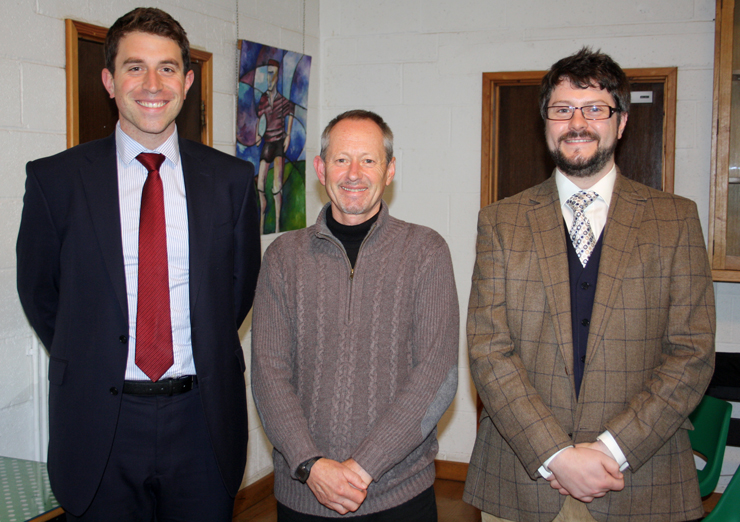 A story of redemption, self-realisation and forgiveness. A story about error, and how easily our lives can go wrong. A story about prisons, justice and punishment. This was the story of John Hoskison, former world golfer, who spoke to Shiplake’s Year 11 Philosophers last month as part of their study of the ethics of crime and punishment. Mr Hoskison had been attending a business meeting where the alcohol was flowing. In a moment of foolishness he had decided to take the risk and drive home. On the way he hit, and killed, a cyclist. He was sentenced to prison and he agreed to come to the School to tell us about that experience. But more than this, he felt it was his duty to warn our pupils about the perils of driving under the influence of alcohol and to muse on the way a life can change because of one stupid decision.
He described life inside. Although we run many exciting trips to interesting places, it is not possible to take a tour of one of Her Majesty’s Prisons, and his insights were extraordinarily valuable. He described the noises, the smells and the fear of inevitable violence. He spoke, too, of companionship and hope, of the need to do the right thing and learn a lesson. The message hit home, and the boys listened in rapt silence as myths about Playstations, trips to football matches and a cosy four-square-meal-a-day existence were exploded before them. For life inside is one very different from ours out here. We mused on the effectiveness of incarceration as a means of punishment, whether it achieved the aims of justice or merely protected the law-abiding from the criminal recidivist.
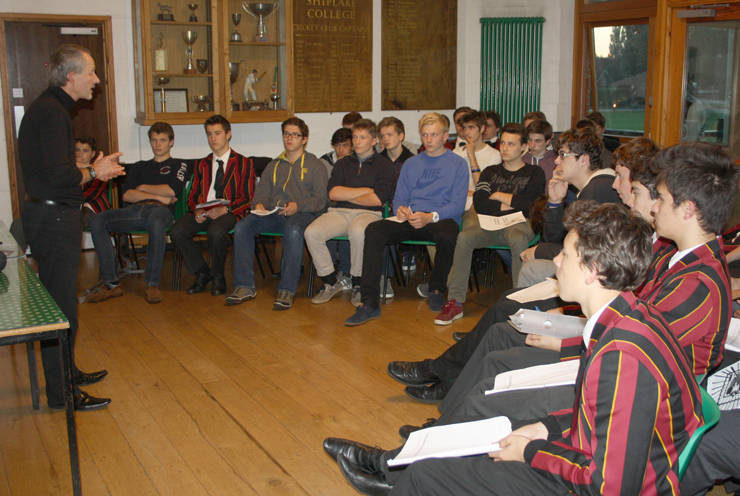 For Mr Hoskison, the central issue was narcotics. For him, the plague of drugs was at the heart of the feelings of despair and worthlessness a prisoner encounters. He urges the Government to tackle the rising problem caused by the porous prison walls, where hard drugs are traded for phone cards, cigarettes and even sexual favours. The grim arc of his story was plain for all to see, for it was a legal drug that had landed him in prison and it was illegal drugs that threatened to keep him there. But through power of will, or through the forgiveness of the family from whom he had taken a young life, or through simple hope, he resisted the apothecary scourge and climbed ever nearer the lightscape of release. And once there, we were privileged to see a redeemed man.
The questions the boys asked were deep and searching. They inquired about the trivial (‘do you get a telly in your cell?’) and the profound (‘what does it feel like to have killed a man?’) and they were privy to a unique opportunity to hear the story of a man who had gone from the height of success to the depths of despair in a single instant, on a single night, because of a single life-altering choice. But what is the real lesson we learn from him? Is it that prisons are violent? That there are drugs? That for some it is a lifestyle, not merely a life? No, what we learned was much more meaningful than this. It was that mistakes can be deleted, that sins can be washed away and that, in the words of St Francis, it is in forgiving that we are forgiven.