
Iconic Town Landmark Gets Historical Plaque
The iconic obelisk which now stands on Mill Meadows beside the playgrounds and river has had an interesting journey in the town over the years, being sited at two other locations before it came to this last resting place in 1973.
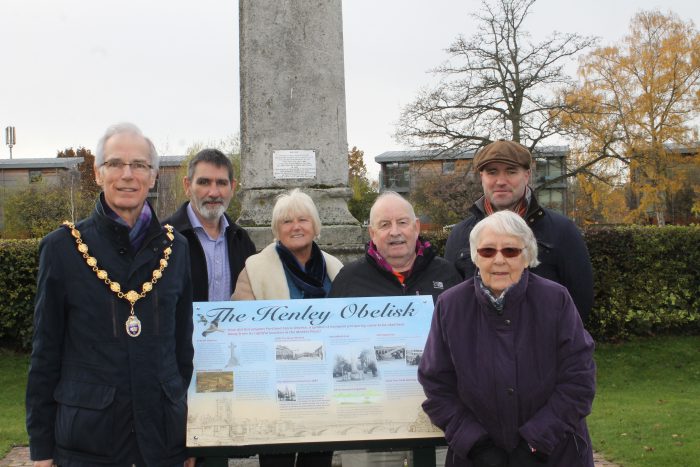
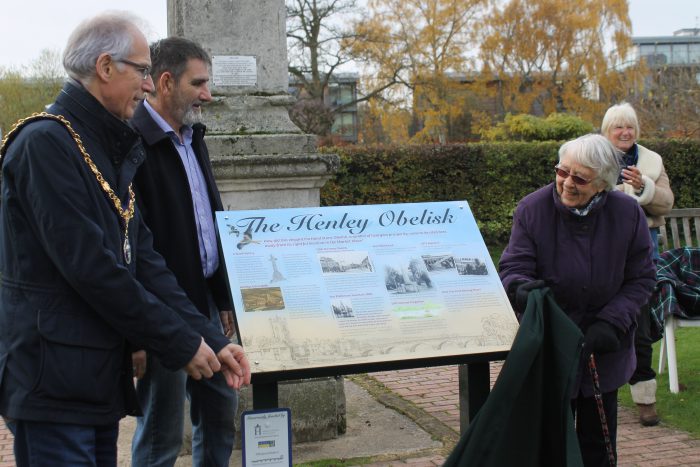
A new plaque outlining the fascinating history and the locations of the obelisk was unveiled on Saturday. The obelisk was made from Portland Stone in 1788 and was a symbol of Henley’s civic pride and prosperity and was first installed in Market Place. It was inscribed with the distances to Reading, Oxford and London. The obelisk was replaced in Market Place by the Phillimore Fountain in 1885 which was also moved after 17 years to where is now located near St Mary’s Church. The obelisk was moved to a roundabout at Northfield End but in 1970 it was dismantled to make way for a road improvement scheme.
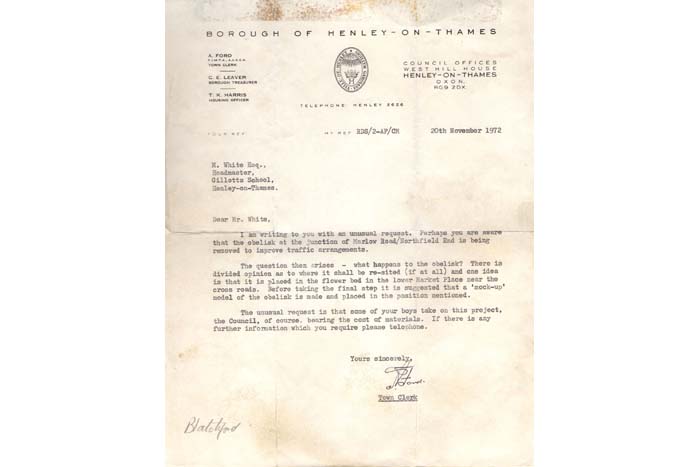
In 1972, the Town Clerk, Mr A Ford wrote to the Headmaster of Gillotts, Mr White:
“I am writing to you with an unusual request. Perhaps you are aware that the obelisk at junction of Marlow Road and Northfield End is being removed to improve traffic arrangements.
The question then arises – what happens to the obelisk? There is a divided opinion as to where it is re-sited (if at all) and one idea is that it is placed in the flower bed in lower Market Place near the crossroads . Before making the final step it has been suggested that a ‘mock up’ model of the obelisk is made and placed in the positioned mentioned.”
The letter continues, “The unusual request is that some of your boys, take on this project, the Council, of course, bearing the cost of materials.”
A subsequent letter then said, “the cost of materials for this project is limited to £20” and before any work is commenced Lord Esher’s views on siting the obelisk should be obtained (Lord Esher designed the seating area in Market Place).
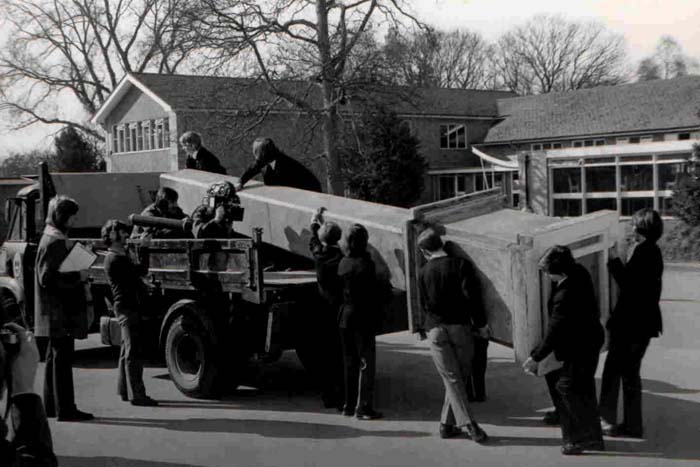
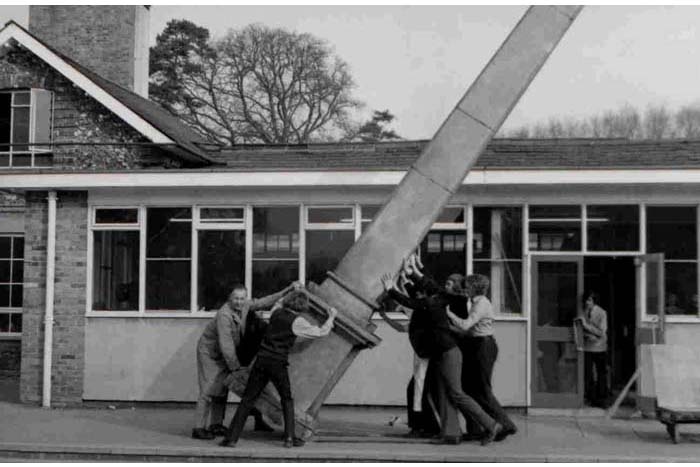
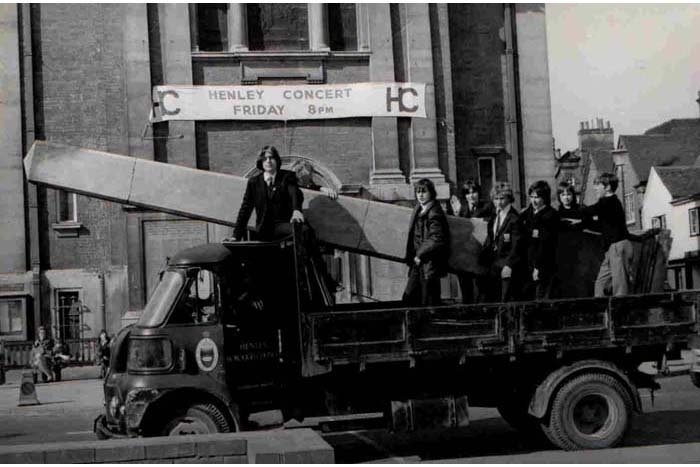
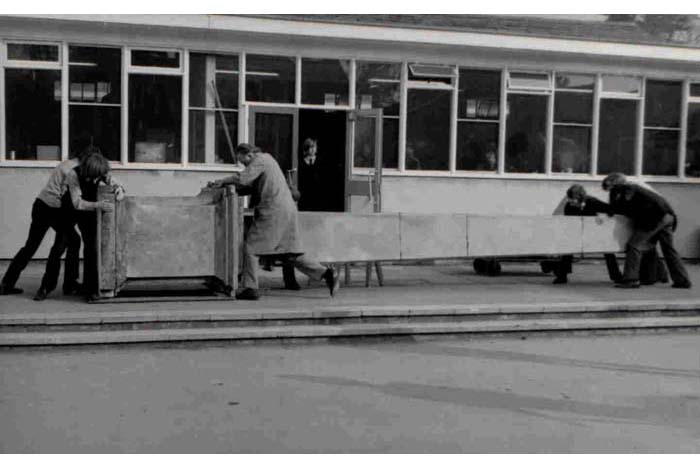
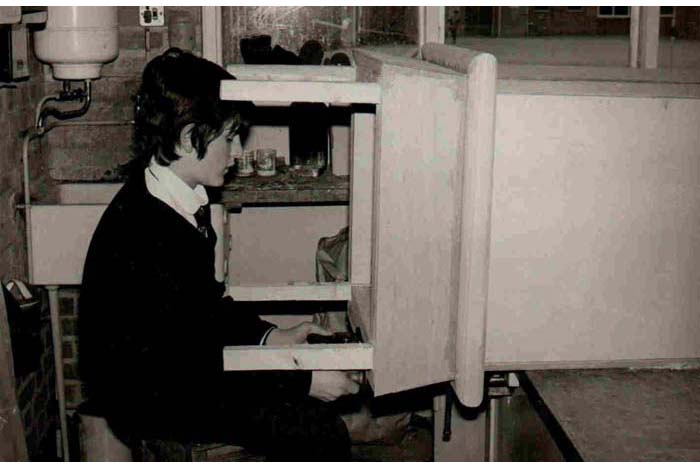
Elsie King unveiled the plaque on Saturday. Her husband Stan King was a metalwork teacher at Gillotts School who along with Roger Pitcher and Tony Smith helped around 15 children build the mock up. Roger who was also at the unveiling and had kept the above letters said, “It probably took about a month to complete. We moved it on a EC Clark lorry to several locations and it was filmed by the Nationwide TV programme. It is fantastic to see this plaque installed giving its history. You couldn’t possibly do a project like this today. I’m not sure how we managed to do it as it was really heavy with sandbags inside.”
One of the children who built the ‘mock-up’ was Councillor David Eggleton, who from the above pictures has named the following children as being involved (he apologises if the names are not correctly spelt) – Edward Orme, Paul Leaver, David Sockett, Grant Storey, Ian Cook, Robin Andrews, Mark Bayliss. Simon Smith, Gavin Cameron, Clark Donnison, Paul Farah and Ian Lay.
David said, “This plaque brings history to the forefront – bringing what they did back then for people to read about now. It would great to have more community history projects for schools today to get involved and to understand where we come from, what our heritage is and protecting it.”
This is the third historical plaque which has been installed with the help of local resident Viv Greenwood who carried out the research. There is one at the entrance to the Gainsborough Estate which details the history of Humphrey Gainsborough and the other is on Greys Road at the steps to Makins Recreation Ground which details the history of Makins family who bequeathed the Makins Recreation Ground. There are plans for at least two more plaques at War Memorial Place and one detailing the history of Henley Bridge.


