Woodland Site Planning Application Refused
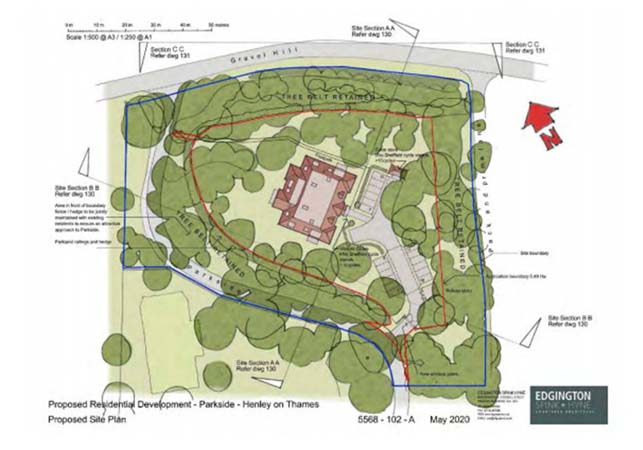
The planning application to build on a woodland adjacent to Parkside and Pack and Prime Lane has been refused by South Oxfordshire District Council.
The application was for 8 apartments and involved the removal of 52 trees, mostly with TPOs. It is the third time planning has been refused on this site. In May 2017 plans were submitted for 15 apartments and in February 2018 amended plans were submitted for 10 apartments.
The planning approval in 1989 for Parkside included a condition that the woodland be preserved as woodland for the amenity of all the residents of Parkside. This specifically stated that it must remain woodland and not be allowed to become garden.
The application was reviewed by Henley Town Council’s Planning Committee in July and was unanimously voted by Councillors for the application to be strongly refused on the grounds that it was not in the Neighbourhood Plan and the proposal would result in the loss of significant number of mature trees which are covered by a Tree Preservation Order and protected by 2006 legislation as a Priority Habitat. The priority habitat provides an important wildlife corridor and should be preserved.
Over 300 local residents also logged their opinion for the application to be refused.
In the refusal notice by Head of Planning, Adrian Duffield stated:
“The proposal would develop an area of woodland covered by a Tree Preservation Order which does not fall within the built-up limits of the settlement and is not a site allocated for residential development under the adopted Joint Henley and Harpsden Neighbourhood Plan. The application does not demonstrate that there is an overriding public justification for the extension of built development into the countryside.
The scale, bulk and massing of the proposed building would be at odds with the built form within the locality. This would be exacerbated by the extensive tree removal and landscaping works.
The application site constitutes a priority habitat (habitat of principle importance for the conservation of biodiversity.”
The applicant has six months to register an appeal against the decision.