Korean War Re-Enacted in Shiplake
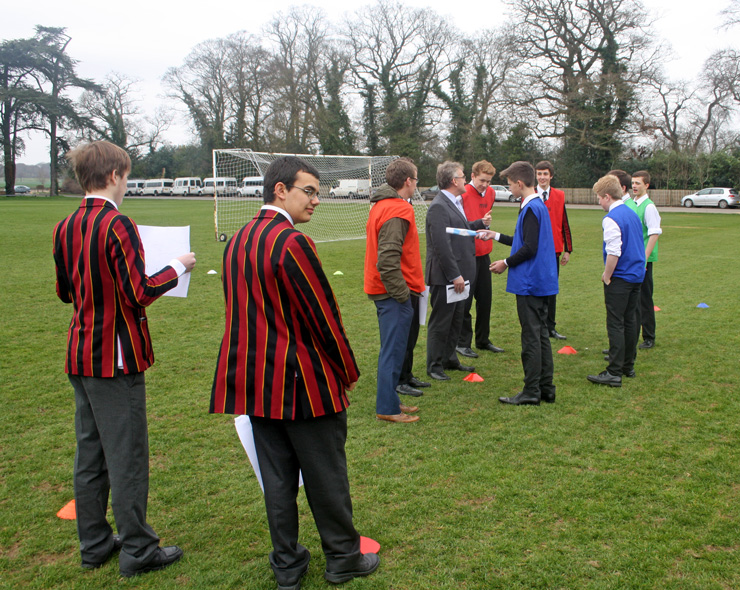 In recent lessons, GCSE History pupils at Shiplake College have been studying the Korean War. As with all historical battles, there are a number of intricate details and key dates to remember. To assist pupils’ learning and subsequent memory of the facts, History teacher Nick Brown decided to take his class out onto the Shiplake grounds to re-enact the war!
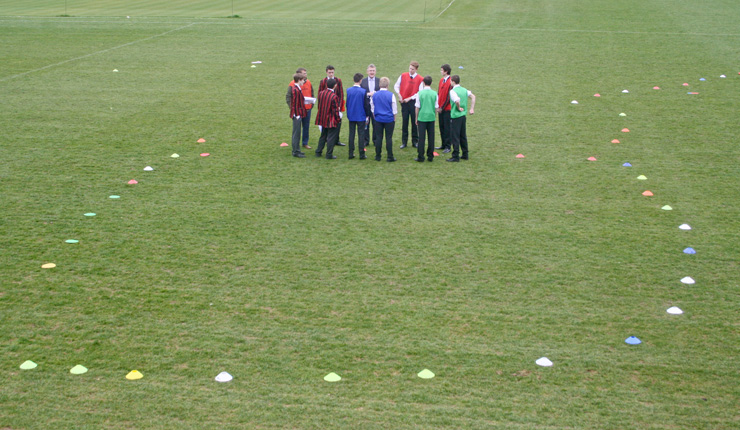
Fear not, the task was centred around the tactical positioning of different nations, rather than the fighting itself. Pupils were allocated to a country’s army using different coloured bibs. Cones were used to map out the region, with an all important divide at the 38th parallel, upon which the majority of the war was contested.
The war began on 25 June 1950 when, following a sustained period of building tensions, North Korea invaded the South. The North Koreans (red bibs) were aided covertly by China and the Soviet Union. The South Koreans (Green bibs) were pushed all the way down into the Pusan Pocket in the south-eastern corner of the country.
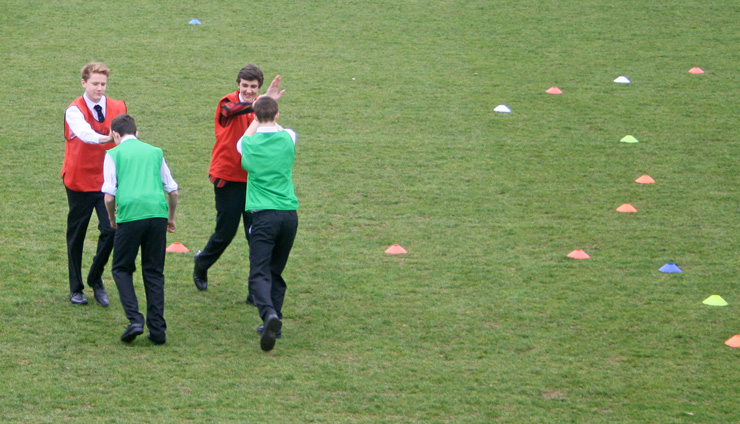 At this point, pupils representing the United Nations (blue bibs) got involved, landing at Inchon. The UN response was led predominantly by the USA, as they had a policy to contain communism. The pupils accurately identified General Douglas MacArthur as the mission commander, and demonstrated how the UN response pushed the North Korean army all the way back to the Chinese border. The next turn of events was the Chinese (blazers) retaliation, which caused the longest retreat in US military history all the way back to Seoul.
The opposing sides spent two years fighting back and forth around the 38th Parallel, but little territory was exchanged. The stalemate continued until the war eventually finished where it had started. Pupils then learned about the armistice which followed, resulting in the permanent division of Korea. There is no doubt this active task will help to reinforce pupils’ learning of the topic, hopefully aiding their recollection in upcoming exams.