
OCC Found Negligent on Bell Street and Bell Lane Development
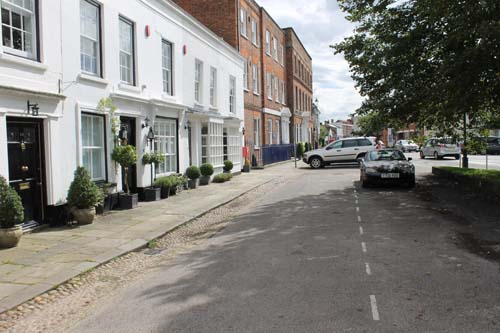 A judge this week has found that Oxfordshire County Council (OCC) were negligent in providing a local authority search result which failed to reveal that part of the Land was suspected as being a highway maintainable at public expense on a development at 94 and 96 Bell Street and 2A Bell Lane in Henley.
In 2007 Chesterton Commercial (Oxon) Ltd (Chesterton) purchased 94 and 96 Bell Street and 2A Bell Lane in Henley for £1,245,000 and within the boundary of the site bought were 10 car parking spaces. The seller of the site confirmed these were in his control and not used by the public. Chesterton’s solicitors also submitted a local authority search in respect of the Land. The search result showed Bell Street to be a highway maintainable at public expense but expressly stated that Bell Lane and an area fronting Bell Street (which included the car parking spaces) was not highway maintainable at public expense.
The development proceeded and Chesterton sold four of the spaces to local residents and marketed the redeveloped properties with the rest of the spaces. Unfortunately, what had not been disclosed by the local authority search was that there was an ongoing debate (indeed some of it going back over 50 years) as to whether the Land did in fact form part of the 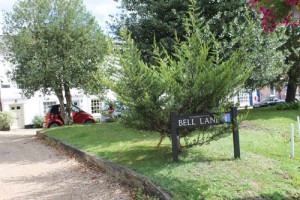 highway maintainable at public expense.
Historical evidence suggested the Land formed part of a turnpike road in the early 1800s. The common law position is that in the absence of a stopping order, the maxim “once a highway always a highway” applies – a public highway cannot be lost by disused or abandoned.
By September 2006 OCC started investigations into the Land and acknowledged the possibility that it may have been, and therefore may still be, highway maintainable at public expense. In October that year the Council wrote to local occupiers advising them that whilst searches would show this stretch of road was private this may be overturned. However, it was not until August 2007 that the Council decided to disclose its investigation on search results. It was finally determined in 2009/2010 that the Land was in fact highway maintainable at public expense.
As soon as the local authority searches revealed the existence of the investigation, Chesterton’s purchasers began having issues with the parking spaces. This was not part of the case but local residents who bought the spaces are now suing Chesterton. In addition two purchasers of the redeveloped properties proceeded without the car parking spaces with a discount of between £40-45,000 per property. Chesterton claimed against the Council for what it contended was the difference in the value of the development site with and without the parking spaces (some £400,00) plus £15,000 in professional fees which it claimed it had spent attempting to mitigate its loss (including trying and failing to obtain a stopping up order in respect of the Land).
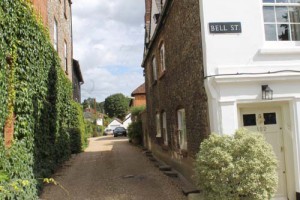 The judge held, in line with previous case law, that the Council owed a duty of care to Chesterton when giving the response to the enquiry as to whether the Land was highway maintainable at public expense. Under section 36 Highways Act 1980 a council must make, and keep corrected up to date, a list of the streets within their area which are highways maintainable at the public expense. In this case the judge found the failure to disclose the investigation on Chesterton’s search result meant that the list of streets was neither correct nor up to date. The judge did not accept the Council’s position that it only had to record streets known to be highway maintainable at public expense and did not have a duty to identify roads under investigation.
The Council’s express statement that the Land was not highway without mention of the investigation amounted to negligent misstatement. The judge awarded Chesterton £240,000 for the difference in the value of the development site with and without the spaces (the Council’s Expert’s valuation) and its costs for seeking the stopping up order. It was also able to recover its increased costs of funding given it overpaid for the property. Chesterton’s increased professional fees for dealing with the purchasers of the spaces after the issues came to light was found to be too remote.
Councillor Ian Reissmann said, “Campaigners and residents fought a long and honourable battle to retain this public amenity as highway to be used for the benefit of the public. Sadly, others come out of this affair with less credit. OCC were careless in not keeping proper records of public highway (which were provided to them in 1974 when Henley Borough Council handed over as Highways Authority to OCC). OCC then attempted to handle this error by working with the developer to give away the public amenity. The developer was happy to make a gain and sell the parking places to make a profit at public expense. The public campaign ensured this would not happen and the amenity was kept for public benefit when the Stopping Up order was refused at the public hearing.
I am surprised at the decision of the court, as it has now ensured that the gains that the developer and original seller of the land wished to make have been funded by the taxpayer, which seems perverse. OCC did communicate to landowners that the status of the land was in question before the sale to the developer. So it would appear that the original vendor has gained an inflated value by failing to disclose properly the status of the land. I hope that this undeserved windfall for the vendor is now available to compensate the public purse. Sadly, I believe this will not happen.
I hope that OCC solicitors who gave the incorrect advice can use their
Professional Indemnity Insurance to pay the £240k which was awarded to the developer. Lastly I hope that OCC will restore the area of land to its original condition and undo the damage done to the Georgian pavement and other heritage parts of the site while OCC failed to maintain properly.”
David Nimmo Smith, Henley’s County Councillor said “When, back in August 2009, we first became aware that there could be problems regarding the status of the road on which the bays stood, I repeatedly proposed that Henley Town Council (HTC) sit down with Chesterton and OCC to explore a possible compromise solution and thereby avert the risk of liability falling on the public purse.
The pleas went unheeded. This was despite the fact that OCC wanted to resolve the problem at the outset by extinguishing any highway rights in the surface of this controversial piece of roadway by a process called “stopping up”. This would have restored the road’s private status – which is how it had been treated historically up until then – and maintain the status quo, thereby avoiding a risk to the public purse.
But in February 2011 HTC vetoed OCC’s plan to stop up the road. To do this the then Henley Residents Group (HRG) mayor used her casting vote. Cllr Ian Reissmann persuaded HTC that there was no risk to the public purse because, in his opinion, the Council could not be held liable.
The next stage in this protracted saga was that Chesterton then made their own attempt to extinguish the highway rights by making their own stopping up application. This was rejected by HTC, who had historic veto rights.
This resulted in a 3 day local Public Inquiry to resolve the matter. The outcome was that the surface of this controversial roadway was declared public highway on the balance of probabilities.
As a result Chesterton sued OCC in the High Court for which they have now been awarded damages and costs.
So what has this all achieved in practice? Before the start of this saga, there were 7 parking spaces on the road in question. Once marked out, this will reduce to 5.
As for compensation awarded to Chesterton. Currently they are declining to share any of it with those who purchased car park spaces from them. Is this how respectable companies carry out business? I leave it to readers of this article to judge.”



For far too long county councils have been neglecting their duties to keep proper highway records, so may be this will serve as a wake up call to others. As well as disputes like this one, all over the country there are footpaths, bridleways and byways that just do not appear on the List of Streets, or on the other record Councils have to keep, the definitive map of rights of way. But in law they are all highways and should be recorded. Anyone can do the research to check the status of paths. ‘Rights of Way: Restoring the Record’ is a how-to guide to where the old records are kept and what evidence is needed to have highways recognised by the Council. It was written because we only have until January 2026 to record some of these old routes before Parliament said unrecorded ones will cease to exist, but it applies equally to the width of highways as to the existence of them at all.