Phyllis Court Computer Group Marvels at Advances in IT
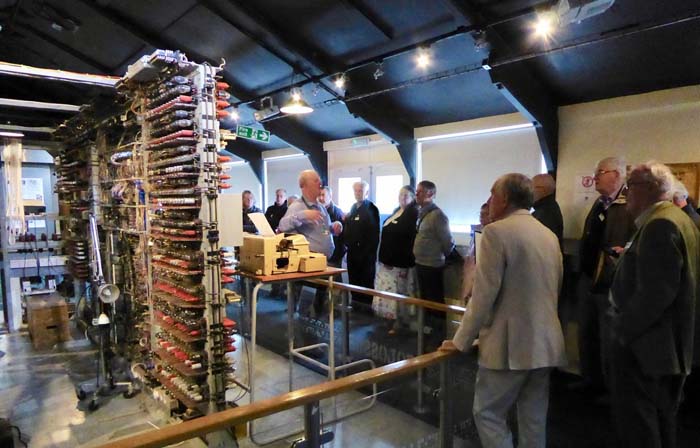
The flourishing 300-strong Computer Group at Phyllis Court Club recently organised a visit to the National Museum of Computing at Bletchley. Now separate from the code-breaking centre, this fascinating museum has computers from every age and demonstrates the enormous leaps that have taken place in the world of IT over the last seventy years. One of the earliest is the famous Colossus machine which played such a vital role in spotting patterns in the German High Command wartime radio messages, thus helping the staff at Bletchley to break the codes and greatly shorten the war; it analysed – at what was then considered breakneck speed – the tapes that had been so painstakingly punched out by the dedicated women responsible for interpreting the printouts of the radio signals.
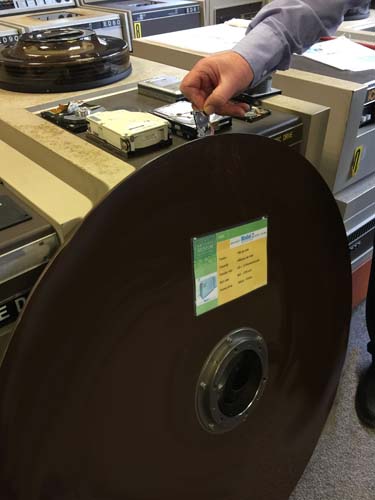
Although fully aware already of how far and how fast technology has moved, even members of the Computer Group were staggered to see how much data could now be stored in such a small object, compared with 50 years ago. In 1965 the enormous disc in the photo (below) held only 4 megabytes on each side, whereas the minute one being held above (between thumb and forefinger) has a capacity of 40 GIGABYTES – ten thousand times as much. It really is mind-boggling!
Sue van der Veen from the Computer Group said, “Even the computer enthusiasts at Phyllis Court learnt a lot during their day out at the National Museum of Computing. They were intrigued to see the 80 years of computer history laid out before them.”