
The Games Museum Exhibition Opens to Celebrate Olympic Rowing Legacy

The new exhibition to celebrate the Olympic Games and looking ahead to Paris 2024 opened last Wednesday evening at the River & Rowing Museum for a special exhibition preview.
The Games at Henley exhibition open until 15 September explores over a century of global competition and highlights both the 1908 and 1948 London Games, the people who made it possible, and the legacy the Games have had for the modern Olympians and Paralympians who call Henley home. Visitors can explore incredible individual stories through a community of current and retired Olympians and Paralympians who represented Team GB in rowing, including Sir Steve Redgrave CBE, Naomi Riches MBE, Vicky Thornley, Alan Campbell, James Fox MBE. Interviews were conducted by local young people from The Langley Academy Trust who spoke to these athletes about why Henley is so important to the sport, and their lives.
Naomi Riches MBE, an adaptive rower who was part of the British mixed coxed four team that won gold at the 2012 London Paralympic Games and a bronze in 2008 in Beijing. Naomi said, “Well obviously when I was asked to be a part of this, it was an absolute no brainer. Seeing it all come together: watching the video with the interviews, seeing all the bigger than life size pictures on the wall of these amazing rowers, and to be counted as one of them. I know what you do when you’re training is you’re so in your own world, in with your crew and your process that sometimes you actually forget how big what you’re doing is, until you cross the finish line and then you’re like ‘oh my god that’s huge’. The media attention that comes with it and the crowd and everything brings back some of those lovely warm fuzzy feelings from 2012 and winning. Having it recorded in this way alongside so many other incredible human beings is really special.”
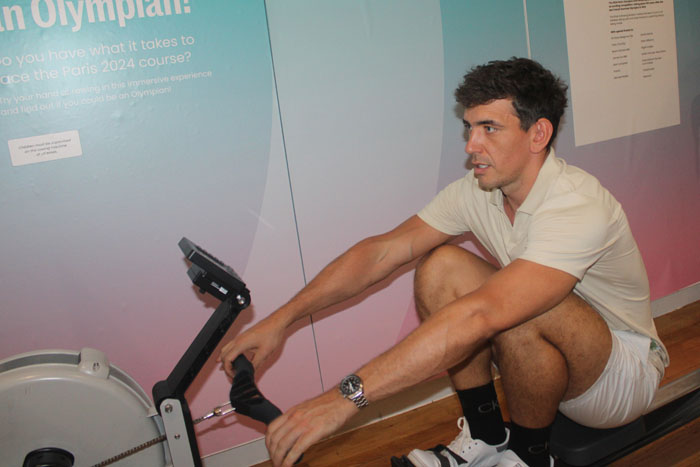
You can get into an athlete’s mindset training for Paris 2024, by trying your hand at racing in the Vaires-sur-Marne Nautical Stadium with an immersive rowing machine experience from ImersU.
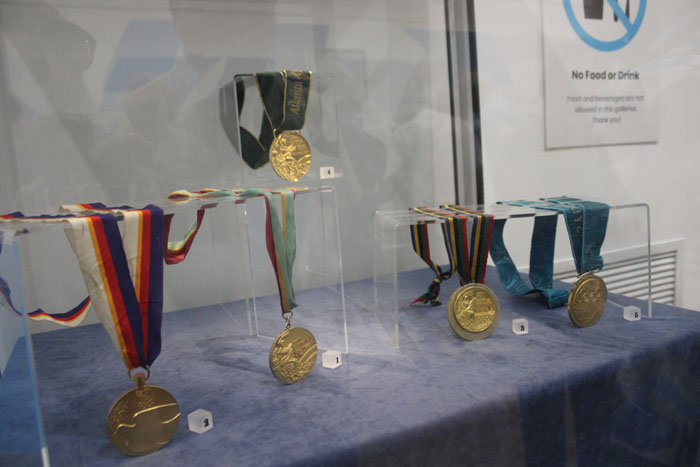
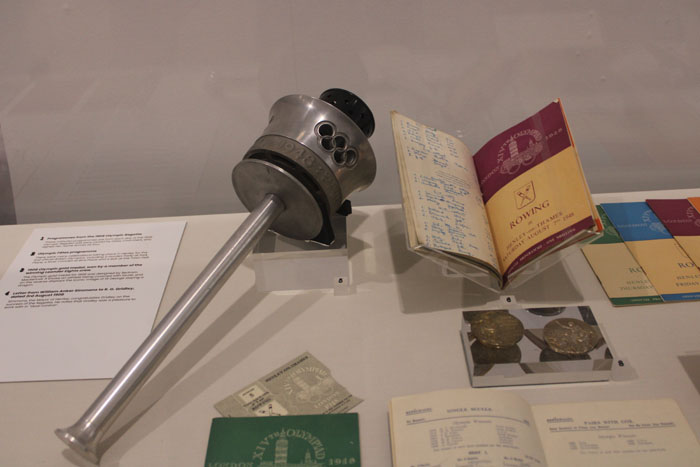
Cate Tren, Museum and Exhibition Curator said, “I have two favourite things – a very fancy and a mundane one. So the very fancy one, obviously, is Sir Steve Redgrave’s 5 gold medals. They’re very impressive and they’re very shiny, they look brilliant in there. We approached him about the medals but also to get involved with the interviews and he was super enthusiastic about coming down to talk to the kids from Langley Academy. They were thrilled to meet him. He handed round one of the medals so they all got to hold it. They had a brilliant day with him and I think the questions they came up with were really good as well. I think my more mundane favourite thing was when we were looking through to decide which programme to pick, we realised that one of them still had a ticket stub folded in half in it. It didn’t say that on the record. It was from the 1948 games. It was such a lovely moment to be like oh my gosh that was part of their games. The challenge was definitely doing it in such a short time frame, but I think it all came together really really well. We had a lot of support from the team, all the people we worked with, and the athletes were all super helpful as well. So we got it all together in the end. I had a lot of help with research from Michael Redley, Peter Williams and Sandy Nairne who wrote the book about Lord Desborough. And we got to have a chat with them about it so that was really helpful. But yeah, the greatest challenge was a short time frame and I think trying to narrow down what we could actually put in.”
Piers Burnell was invited to the opening as his family had loaned his grandfather’s (Richard Burnell) medal from London 1948 and his great grandfather’s Charles Burnell medal from 1908. Piers said, “I think the 1948 is more special because it was the austerity games, it’s the only one that isn’t made out of gold. It’s gilt silver. Growing up, I would always be really excited about where’s the gold medal? I remember seeing it when my grandfather died in ‘95. The next time I saw it was at the Museum in 2012 when they did the film about Bert Bushnall who Richard sculled with. So it’s lovely to see it after another 12 years back where it was won with the 1908 one in the right place. Because it is not gold, it looks dirty but I quite like that, it’s quite unique. It’s tiny compared to recent ones and it never had a ribbon. It was just plonked in their hand. It was literally just, there you go mate, well done, off you pop, jolly good!”
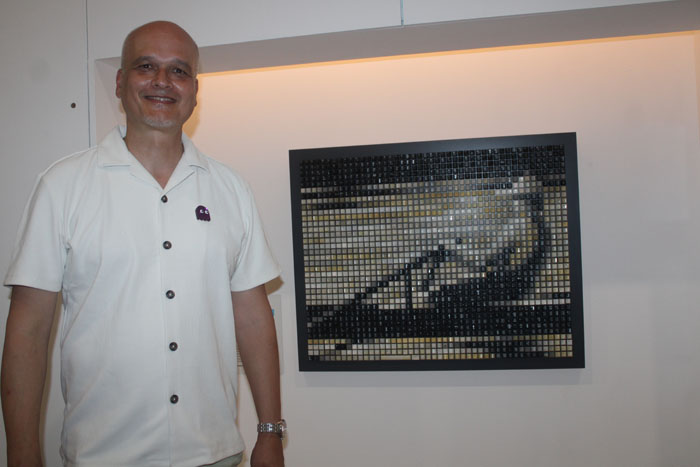
An unusual exhibit in the exhibition is an artwork by Peter Schonwandt made by using old computer keyboards. This artwork is made from 1735 reused computer keys, bringing together a beautiful image of a single sculler on the water and in the top left corner spells out Rowing Champions. Peter and his friend Nigel Longley who rowed in Henley Royal Regatta in 2001 helped Peter obtain old keyboards from Olympic gold medallist Andy Triggs Hodge, British Rowing Chair, Anne Marie Phelps and German rowers. After completing the artwork in 2018 Peter collected autographs from Olympians including as Sir Matthew Pinsent, Andy Triggs Hodge and Jack Beaumont at Henley Royal Regatta for the reverse of the artwork. Peter said, “I was trying to get hold of an old Bill Gates computer keyboard but Nigel said he had come up with something else! Some of the keyboards are 40 years old and they are all natural, I don’t colour them. The artwork then went on display in the Leander Library and it was auctioned to support two youth rowing projects in England and Germany.”
During the Henley Royal Regatta, anyone with a competitor pass can enjoy FREE entry to the River and Rowing Museum.




Leave a Comment
Want to join the discussion?Feel free to contribute!