
Mission: Everest – “Fortune Favours the Brave”
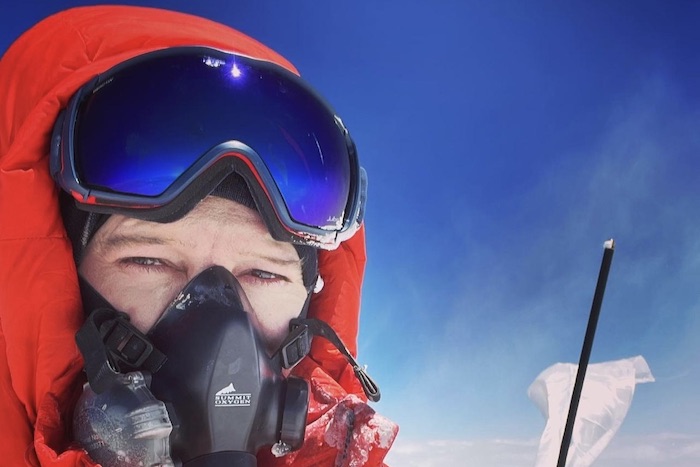
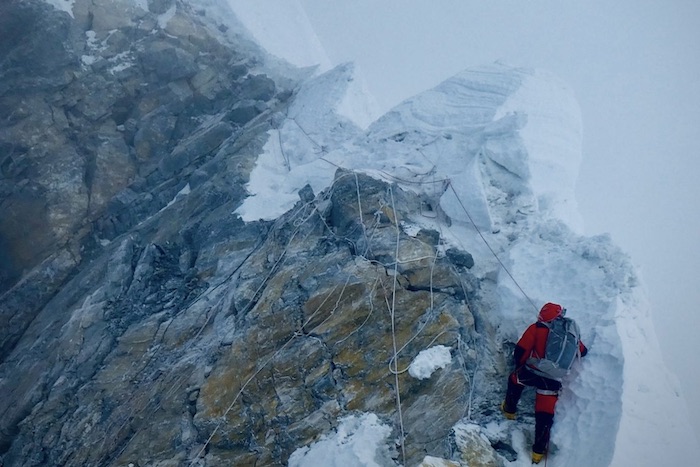
A team of 4 highly experienced former special forces veterans will be attempting the fastest-ever ascent of Mount Everest this May – travelling from London, to the summit of Everest, and back in just 7 days – significantly faster than the more usual expedition time of nearly two months. Their aim is to highlight the military veterans community and their welfare, and to raise £1 million for a number of Armed Forces and Veterans’ charities, including those that support bereaved military children. As veterans of every major conflict of the last 30 years, the team are quick to point out that this is cause they are passionate about. ‘We have all served in the military with colleagues who never made it back, many of whom left children behind.’
The group will be led by Garth Miller, from Henley, who previously held the record for the fastest London to London ascent of Everest, at just 21 days. With more than 75 years of combined military service between them, the team are approaching the challenge as they would any military operation; combining meticulous planning with bold execution. Garth said: “Having summited Everest before I know I can’t go any higher so I have become fascinated by how fast we can go. We all have families and busy jobs, so it is impractical to be away for 8 weeks at a time on expeditions. Our ‘Mission: Everest’ project is based on speed, innovation, and sustainability. This time round we could potentially drop the kids at school on a Monday, be on top of the world by Thursday and be safely back home with our families in time for Sunday lunch.”
Garth, who trained at the Royal Military Academy Sandhurst, served as an officer in the Royal Gurkha Rifles and so has a special place in his heart for Nepal, its people and the Himalayas. He speaks the Nepali language and visits the country as often as he can. A veteran of three operational tours in Afghanistan, he now combines service as an army reservist with his career as a long-haul pilot with British Airways. An experienced adventurer, Garth holds a Master’s degree from Cambridge and away from flying he has completed 10 Ironman Triathlons as well as the infamous Marathon des Sables, so fitness shouldn’t be too much of an issue! The team includes Al Carns, MP and Minister for Veterans and People, Anthony Stazicker and Kevin Godlington, who all bring their own experience and expertise to the team.
Mission: Everest will utilise cutting edge science to help the team achieve their goal. For example, they will acclimatise to extreme altitude before even setting foot in Nepal, thereby speeding up that particular part of the usual process. Since February, they have been sleeping in specially adapted hypoxic tents. The tents fit over their beds and suck oxygen out as they sleep. It is hot, sweaty and smelly, Garth explained. “It’s not a hack or a short cut but it does mean that we can acclimatise in the safety of our own homes. It can be painful, but for me it’s a better alternative to spending months on a glacier in advance of the climb – at least I can get up in the morning and go and have breakfast with the family! The tent stimulates physiological changes, increasing our red blood cell count, but we need to complete 450 hours to be ready.”
Obviously there is a lot of physical training to be done to make sure the team are fit, however this has to be balanced with risk of injury. Some of the training is done as a team, but as they all come from different areas (Kent, Poole, and Birmingham) a lot of the training is done alone. Whenever possible Garth likes to invite friends to accompany him on training hikes in the Chilterns. For physical preparation, Garth uses both F45 and TG gym in Henley. The team will also be trialling an innovative noble gas therapy, utilising xenon gas which research suggests will reduce their susceptibility to HACE or HAPE – both potentially fatal altitude-related illness.
Come May, the team will be on ‘Immediate notice to move’, waiting for a call from the support team at Everest Base Camp to say that a summit weather window is imminent. When the conditions are right, the clock starts and the team will set out from Heathrow. From Kathmandu they will be helicoptered directly to Everest Basecamp where they will spend just 2 hours before beginning their climb – just enough time for medical checks and to receive a blessing from a local Buddhist monk asking for safe passage on the mountain.
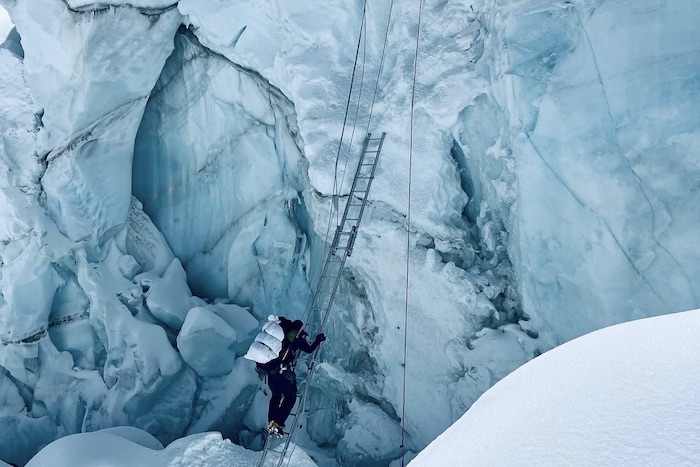
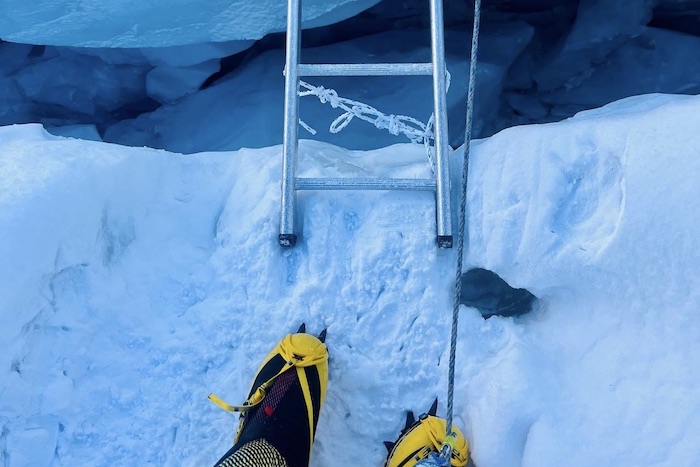
When asked if there was time to sleep within the gruelling schedule, Garth smiled and replied: “We will rest, refuel and rehydrate when we need to, but the plan is to push as high as we can as quickly as we can.’ Garth explained ‘The main risks are weather, extreme temperatures which can range from +30 to -30 degrees celsius (plus wind chill), and the infamous Khumbu Icefall. The icefall is one of the most dangerous parts of the climb and you need to cross it at speed during the night when the cold temperatures hopefully freeze the giant ice seracs in place. The risk, of course, is that they collapse, and this typically causes fatalities every year.’
On the question of how he felt about the expedition, Garth was excited but philosophical: “We can control the controllables – we have the latest oxygen technology, the best technical equipment, a strong sherpa team and our experience to fall back on, but there are things we have no influence over – for example the weather and the snow and ice conditions on the mountain. We will do what we can to mitigate those risks, but high winds are our next biggest enemy. We will only set out on summit night if the wind is less that 30mph – any more and the climb along the exposed summit ridge is simply too dangerous.”
The impact of climate change is being felt across the Himalayas, and the team are taking their environmental responsibilities seriously. The expedition will have a deliberately small environmental footprint on the mountain and will be entirely ‘climate neutral’ – relying solely on solar power and recycling any waste – in fact, the team will bring off more than they take on to the mountain.
Back in 1953, when Edmund Hilary and Tenzing Norgay reached the summit of Everest on the 29 May, it took until the morning of the Queen’s coronation (2 June 1953) for news to reach the UK. Now, however, it is much easier to keep in touch. The team will be live tracked during their climb and you can follow Garth’s preparations on Instagram @therealgarthmiller.
100% of donations will go to veteran and armed forces charities – especially those which support bereaved military children.
You can donate here: https://www.givewheel.com/fundraising/6962/mission-everest/




Leave a Comment
Want to join the discussion?Feel free to contribute!