
Algaelabs Installs Carbon Scrubbing Algae Tank at Museum
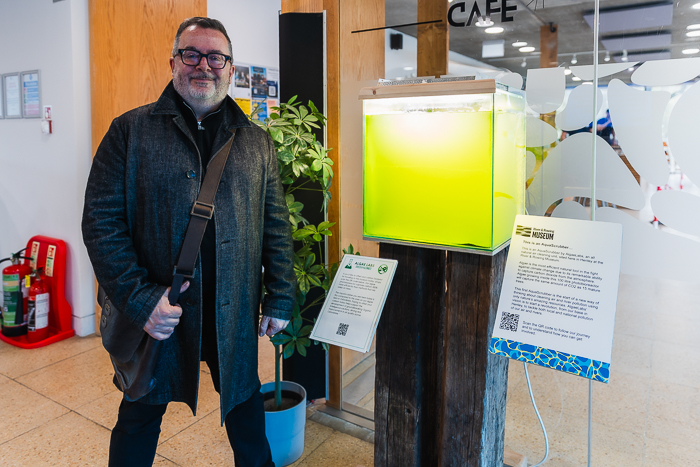
Visitors to the River & Rowing Museum may have noticed a new, futuristic addition in the lobby — a pilot carbon scrubbing device created by Wallingford-based company Algaelabs.
The small tank, known as an “aqua scrubber,” uses algae to remove carbon dioxide from the air and produce oxygen. The installation is designed to show the public just how powerful algae can be in the fight against climate change. According to David Wood of Algaelabs, “This little tank that you can see is actually producing as much oxygen as 30 mature trees.”
David, who lives in Henley, explained the passion behind the project: “I live on a river, and our business partners either live on the island or boats in the river. We have a real passion for the conservancy of both the water quality and the air quality in Henley. So we wanted to put that into practice.”
The company’s algae farm, based in Wallingford, uses a patented bioreactor technology that dramatically improves the efficiency of carbon capture, making their photobioreactors up to 300% more efficient than standard systems currently available.
The museum installation also includes an interactive feature: visitors can scan a QR code that calculates the carbon emissions of their journey to the museum. They are then invited to make a small donation — typically around £1 — to offset their emissions. “The River & Rowing Museum have been super cool about allowing us to bring this in here,” said David. “We’ve had so much interaction — there are children here, high footfall — and lots of people have been scanning the QR code. The more people offset their carbon, the more development we can put into our algae farms.”
Algae Labs believe passionately in algae’s potential not just to clean the air, but also to offer a natural, sustainable solution to river pollution. Algae can play a vital role in improving water quality by absorbing harmful substances and excess nutrients. “If we had photobioreactors in the water, it would clean the water like you have no idea,” David said, highlighting the ongoing issues with sewage discharges into the Thames. Although initial approaches to Thames Water have been slow to gain traction, Algae Labs remain determined to push ahead, raising awareness of algae’s wider potential across the UK.
Over time, Algaelabs hopes to expand their technology throughout Henley and beyond, including installing photobioreactors in areas like Bell Street, one of Oxfordshire’s most polluted roads. “It sounds crazy, but we actually were hoping to put some more of our photobioreactors into the town square to help mitigate that risk with the CO₂ that’s building up,” David said.
To grow their work, Algae Labs are now seeking investment. “We’ve self-funded all of this. We’ve self-funded the farm. But we’re now looking for backers,” said David. “We need the community and some investors to get behind us. We’ve got amazing patent-pending technology, but we can’t do it alone.”
School children visiting the museum can see first-hand at how algae can play a major role in fighting climate change. “We call it organic intelligence as opposed to artificial intelligence — actually finding natural solutions for the local community,” David said.
The small tank in the museum lobby highlights the potential of natural solutions to tackle environmental challenges. But to grow their work, Algaelabs needs support from the community. “We’re just trying to drive awareness of the amazing ability of algae to really be a natural solution for all the harm that we’re doing,” David said. “But we need Henley’s philanthropists to get behind us because we want to grow our operation — and really make a difference.”
To learn more about Algae Labs, visit their website: https://www.algaelabs.co.uk/index.php




Leave a Comment
Want to join the discussion?Feel free to contribute!