
Wildlife Words – Wildlife Friendly Gardening Jobs
June is another bustling period for garden wildlife. Birds diligently seek caterpillars to nourish their chicks, while bees, moths, butterflies, and other pollinators thrive amidst blooming plants and sunny days. At night, hedgehogs forage for beetles, millipedes, and other invertebrates along our borders to provide for their young. As if this wasn’t enough, this season’s amphibians will venture from garden ponds in search of cool, moist refuge for the first time.
1. Put out and top up water
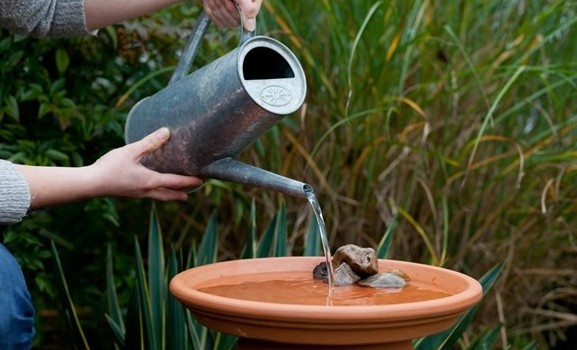
Water is crucial for wildlife beyond drinking. Keeping the bird bath topped up means birds can drink and bathe in dry weather. With clean feathers, birds are better able to regulate their body temperatures, fly from predators and are less likely to get disease. Amphibians like newts, frogs, and toads use water for shelter and breeding, while butterflies obtain essential minerals from muddy water. Any water source, from puddles to ponds, attracts and helps wildlife – particularly now we’re in the warmer months! Make sure you’ve got water sources in your garden.
- Try placing water dishes and bird baths near trees or shrubs so that wildlife can get to safety easily.
- Also try putting water at ground level in dishes or a dug-in pond so that hedgehogs can drink (make sure your pond has an easy escape route).
- You could also put in butterfly puddling stations which are shallow dishes of gravel and water to help butterflies get the minerals and hydration they need.
2. Create a cool, damp spot for amphibians to take shelter
Make a log pile or ‘hibernaculum’ in a shady corner. If doing a log pile, bury the bottom layer of logs and fill nooks and crannies with fallen leaves and moss to make it good for amphibians. Or use the Wildlife Trust’s ‘how to’ to make a hibernaculum. This is a dug-down structure that can be used by reptiles and amphibians for shelter in the summer and hibernation in the winter.
3. Avoid deadheading roses so that they create rosehibs for the birds later this year
Seasonal Spotlight
For many of our local hedgerows, summer is berry season! If you’re curious about your own hedgerows at this time, consider surveying your hedges to receive management advice to ensure your hedges stay healthy! https://www.wildoxfordshire.org.uk/guidance/hedgerow-surveying
Swift Awareness Week 28 June – 6 July
See if you can spot any swifts this month and sign up to our monthly Bulletin to hear all about events and walks taking place https://www.wildoxfordshire.org.uk/news
Let it Bloom June!
Enjoyed ‘No Mow May’? Bring even more wildlife to your wildflowers and take part in ‘Let it Bloom June’! Mowing at the end of May removes the free buffet you’ve created for your bees and butterflies. Let it Bloom June allows the nectar source to stay that little bit longer. Why not leave an area that’s got the most flowers? If you’re able to, a way to provide nectar all through the summer is to leave this section uncut until September and then strim it. All these options give your garden even more of a chance to diversify and provide for wildlife.
Rhiannon Young – Wild Oxfordshire Nature Recovery Engagement Officer
https://www.wildoxfordshire.org.uk/


Leave a Comment
Want to join the discussion?Feel free to contribute!