

Henley’s War Hero Dickie Charlton Sadly Dies
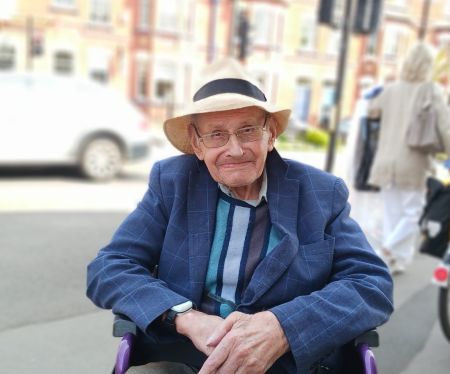
Henley’s War Hero Dickie Charlton died peacefully in his sleep at the Chilterns Court Care Centre on Tuesday (28 May), just 4 days shy of his 104th birthday.
Richard Dennis Charlton was born 2 June 1920, to parent’s William Charlton and Mary Charlton (Nee Turner) in Wargrave, Hennerton, Woods Cottage. His father was a Head gardener at Hennerton House. One of eleven children, Dickie went to the infants school on Greys Hill, in the choir at Trinity, then to National School at the top of Gravel Hill, and to Trinity School.
As a young boy at Regatta time, Dickie sold booklets showing the racing crews colours from the bridge at Regatta time, which he got from Higgs the printers. He once waved at King George as he went under Henley Bridge. This was the first of 5 monarchs Dickie had known.
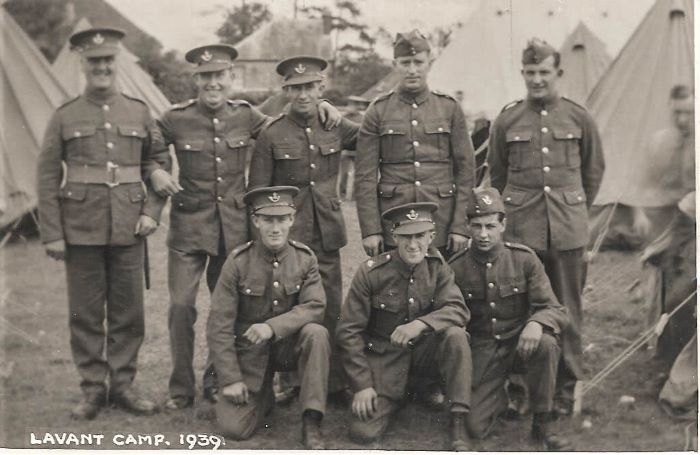
Brother Jack had already joined the territorial army and Dickie joined on his 18th birthday in 1938 one year before the war. As a territorial Dickie was still able to work as a gardener in Shiplake. The war started on 3 September 1939 and Dickie and his brother were sent to Newbury Racing track and stables for more training.
Germany started their offensive attack West and The British Expeditionary Force (BEF) landed at Le Havre with Dickie and 2 other brothers to repel the advancing German army through Belgium and France. The Ox and Bucks ended at St Germain in a training area and building defences and digging tank traps. Here he later became a batman to an officer at an officer training centre for three weeks.
The Battalion then moved through Brussels to the Ardennes. Dickie often recollected seeing the Waterloo battlefield at a distance.
The advancing Germans were very well equipped and the BEF could not hold their rapid Blitzkrieg advance so the battalion retreated yet further to make a stand at Tournay where German Stuka JU 87s bombed them. He always remembered the terrible sound of them diving with added sirens just to cause panic. The battalion moved further back through Lille to Cassell.
An order to hold the Ox and Bucks line while other BEF went back to the beaches to be rescued by Operation Dynamo and the ‘Little Ships’. Brother Jim got off safely at Dunkirk. Dickie was at Dunkirk but ordered to go back to round up stragglers in Casell but got caught in the action unable to compete with the German fire power they surrendered.
They were taken to Poland in cattle trucks and ended up at Stalag VIIIB, Lamsdorf/Lambinowice. Dickie settled into prison life, playing sports and receiving letters and Red Cross parcels.
Come the end of the war when the Russians were advancing west toward Poland over 80,000 POWs were forced to march westward across Poland, Czechoslovakia, and Germany in extreme winter conditions, over about four months between January and April 1945, over 1,000km. Dickie and fellow prisoners endured great hardships in the cold, often scrounging for food themselves, digging up turnips and potato crops in fields. Sleeping in barns or wherever they could find shelter. He did say that some German soldiers were now being more considerate, realising that any further brutality was futile at this stage.
They walked all the way to Munich, a journey of four months covering 1000 km, wearing the same clothes and boots never taking them off. Dickies beard grew right through his wool balaclava.
One morning, the Germans had disappeared and they heard fighting not too far away. They were then freed by General George Patton’s US Third Army with General Patton himself explaining that he regretted not being able stop but he had to move on.
Now in safe hands they were taken to an aerodrome on the Blue Danube, and flown from there to Brussels, St Anne’s Barracks where they were given tea and sandwiches, but told not to gorge as their stomachs would not handle too much.
All their clothing removed, (balaclava cut from Dickie’s entwined beard) and put onto a great smelly heap and burned. He stayed in Brussels for three weeks, before being flown home in the bomb bay of a Lancaster bomber, which Dickie said was extremely noisy with its 4 Merlin engines, He would often say, “You know what it is like in a Lancaster” as though it was a common thing! He landed back in Britain in May 1945 and some of the soldiers kissed ground when they landed.
Dickie returned home to Ledard Cottage to work with his Dad and eventually caring for them. During this period he married the Nanny at the main house, Doris Farmer in 1961. Daughters Shirley and Linda were both born whilst at Ledard Cottage. His mother died in 1959 and after the death of his father in the 1970s, they all moved to Luker Avenue where he continued as a self employed gardener until he retired.
He joined the local Royal British Legion 1946 and was a keen Poppy volunteer and attended most remembrance services. He was awarded the town medal in 2018 for his service to the town.
After Doris’s death in 2019, he went to live in the Didcot care home, coming back to Henley’s Chiltern Court in May 2020, just before his 100th birthday. He entertained staff and visitors with his time in the war. Richard Pinches who got to know Dickie through the RBL said, “his memory was incredible for events 70 years plus ago and he reminded me of my late father and his war recollections who also served and was born the same year as Dickie.”
Rest in Peace Dickie.
Thanks to Richard Pinches for the details in this article. Richard made a film interviewing Dickie for the VE Day 75th Anniversary in 2020 which you can watch here https://www.youtube.com/watch?v=cJnhb40Nkcw






Leave a Comment
Want to join the discussion?Feel free to contribute!