
HAHG Lecture: Londoners in Henley before the Black Death
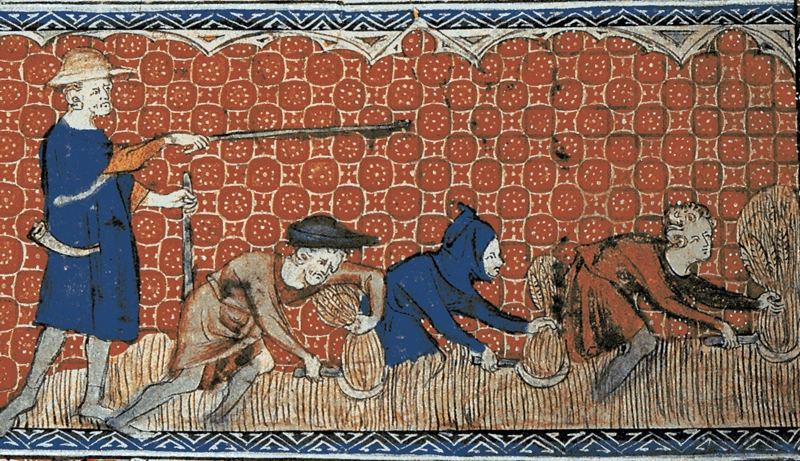
At the Henley Archaeological and Historical Group’s first meeting of the new year on 7 January, members enjoyed a talk by Peter Brown on Londoners in Henley before the Black Death. Peter concentrated on the period between 1280 and 1348, when corn merchants from London played a significant role in Henley’s development.
The Henley area was an important producer of corn and the main customers for this corn were in London. The population of London at the time was around 80-100,000 and each inhabitant needed at least two quarters (of a ton) per year to live. Records for the village of Cuxham, near Watlington show that 60% of the surplus grain produced here was taken on the half-day journey to Henley for shipping down river to London.
Henley was preferred over Reading as the entrepot because the shipping costs from Reading were twice as expensive. The sale of the grain took place in Henley in lots of 30-60 quarters and was loaded into boats called ‘shouts’ for the 3-4 day journey down the Thames to Queenhithe near the Tower of London. This was a difficult and dangerous journey involving passage through flash locks on the river.
The cornmongers, or corn dealers, who operated the trade were members of a London guild and enjoyed a monopoly. They naturally became very rich and Peter had discovered the names of several who owned properties in Henley as well as in London. With the arrival of the Black Death and the resulting sharp fall in the population of London, the merchants experienced a decline in their prosperity. Times were never the same for them again.
The Group’s next meeting on Tuesday 4 February at 7.30pm will again take place at the Chantry House in Henley. The speaker will be Professor Martin Bell of the University of Reading who will describe research into the Mesolithic Archaeology of the Severn Estuary.





Leave a Comment
Want to join the discussion?Feel free to contribute!