

Royal British Legion Talk: Wartime intelligence work
Royal British Legion member Tim Came gave a fascinating talk this month on the wartime intelligence work and the remarkable contributions of his Great Uncle, Stuart Milner-Barry. He was a key figure at Bletchley Park whose leadership helped transform Allied codebreaking into a decisive weapon during the WWII.
Milner-Barry, a gifted chess player and Cambridge scholar, joined the Government Code and Cypher School in 1940 alongside fellow codebreakers including Alan Turing and Gordon Welchman. Working in Hut 6, the team was tasked with deciphering Enigma-encrypted communications used by the German Army and Air Force—an effort that would prove central to the Allied war strategy.
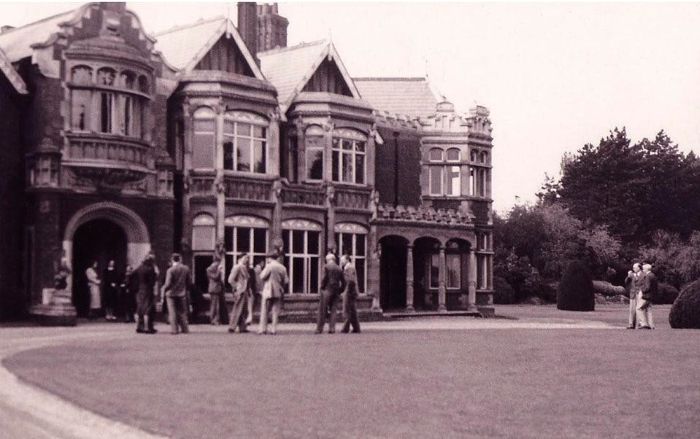
Initially a small and experimental operation, Bletchley Park rapidly evolved into a vast intelligence hub. At its peak, the workforce numbered around 7,500, three-quarters of whom were women. Many were recruited from academic institutions such as Newnham College, Cambridge, often through informal networks.
Milner-Barry quickly emerged as a pivotal figure within Hut 6. Appointed head of the “Crib Room,” he specialised in identifying predictable phrases—known as “cribs”—within German messages. These educated guesses allowed codebreaking machines, known as bombes, to determine daily Enigma settings. By mid-1941, he had become deputy head of Hut 6, helping to turn theoretical cryptanalysis into an efficient, systematic process.
His background in competitive chess proved invaluable. Skills such as pattern recognition, strategic thinking, and decision-making under uncertainty translated directly into the demands of intelligence work. These qualities, shared by many at Bletchley, underpinned the success of the codebreaking effort.
The impact of Hut 6’s work was felt across multiple theatres of war. One early success came in May 1941, when a decoded message revealed the location of the German battleship Bismarck, contributing to its eventual sinking. However, not all intelligence victories translated into battlefield success; despite detailed foreknowledge of the German invasion of Crete, Allied forces were unable to prevent its capture.
Behind the scenes, Bletchley also faced significant bureaucratic challenges. By late 1941, staff shortages threatened to slow progress. In response, Milner-Barry personally delivered a letter—signed by Turing, Welchman, and others—to Prime Minister Winston Churchill. The appeal prompted Churchill’s famous directive: “Action this day,” which led to immediate increases in resources and staffing.
As the war progressed, intelligence from Bletchley Park played a critical role in turning the tide, particularly in the Battle of the Atlantic. By decrypting German naval communications, Allied forces were able to reroute convoys away from U-boat “wolf packs,” significantly reducing shipping losses. Later, during the Normandy campaign, intercepted messages revealed the disarray within German forces, aiding Allied advances.
Despite their achievements, the work of Bletchley’s codebreakers remained secret for decades. Many, including Milner-Barry, spoke little of their contributions until the 1970s, when official secrecy began to lift.
After the war, Milner-Barry pursued a distinguished career in the Treasury and continued his involvement in chess, representing Britain internationally. He also played a role in preserving Bletchley Park itself, delivering a petition to Downing Street in 1992 when the site faced demolition.
Reflecting on his wartime experience, Milner-Barry later described the intelligence advantage as akin to “seeing the opponent’s cards” in a game of bridge—though he noted it did not guarantee victory on its own. He believed its most decisive impact came in the Battle of the Atlantic, where it may have been critical to Britain’s survival.
Milner-Barry was awarded an OBE in 1946 for his secret Bletchley work, a CBE in 1962, and finally a KCVO in 1975. He passed away at the age of 88 in 1995.
The next meeting of the RBL is afternoon tea at Greenlands Hotel on Marlow Road on Thursday 14 May. Limited places available and booking essential by email to HenleyOnThames.Secretary@RBL.Community or 07990 833241 with payment of £24 in advance before 6pm on Thursday 30 April 2026.


Leave a Comment
Want to join the discussion?Feel free to contribute!