

Wildlife Words – Spring Hedgerows and Gardens
This is the first of our Wildlife monthly columns brought you by Wildlife Oxfordshire.
Hedgerows in Spring
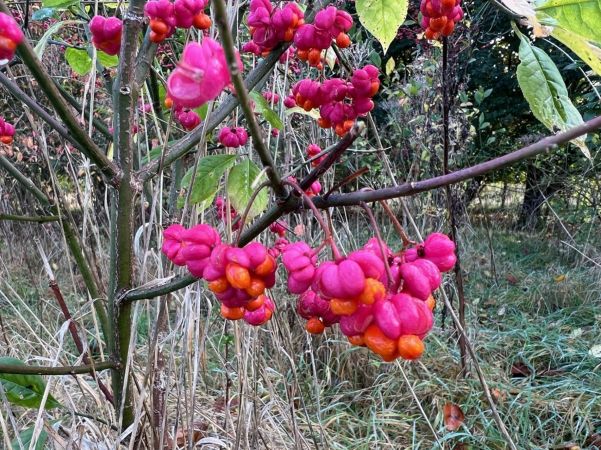
Spring is the season of growth, and our local hedgerows are no exception. This season you can expect to see hedge species beginning to flower. Blackthorn will begin to flower from early spring, blossoming before it’s leaves even begin to show, into beautiful five petal white flowers strikingly similar to Hawthorn. Hawthorn, however, (like Buckthorn, Guelder Rose, Dogwood, Wayfaring, and Spindle) blossoms later in mid spring. Cherry Plum (which began to blossom in winter) will only continue flowering into early spring, preparing to bear berries in early summer.
All of these species are extremely beneficial to pollinators as well as other insects that feed on hedges (i.e., Chestnut moths and Brown hairstreak butterflies). Observe the wildlife benefits mature hedges offer this Spring and get ready to see it in your own local spaces once your newly planted hedgerows reach maturity!
A selection of Garden jobs to Help Wildlife this March
Everyone’s waking up! But remember, it can still go below freezing in March…
– Put out bird food with high fat content to give extra energy when food is hard to come by. Suet treats like fat balls are ideal and sunflower hearts.
– Feed hedgehogs – more info below
– Put in at least one hedgehog gap – more info below
– Have plants in your garden that offer winter/early spring nectar – e.g. mahonia, ivy, willow, hellebores, crocuses and snowdrops to provide a boost for our pollinators after the dormant months. You can also start to think about sowing seeds. Have a look at the packets as many are now marked with a ‘pollinator-friendly’ symbol. Why not grow your own bird food this year and grow sunflowers?
– Create a pond or improve yours for amphibians
– Leave perennials and herbaceous, hollow-stemmed plants unpruned until early April or late this month. These will still be providing homes for overwintering invertebrates like ladybirds.
– On freezing days, break the ice on bird baths and water bowls. Refresh the water supply weekly.
– Build a bug hotel
– Leave piles of leaves and logs undisturbed. In mild weather, it can be tempting to get going in the garden but avoid the urge to tidy away leaf and log piles just yet. Wait until late this month or early April.
– Avoid turning the compost heap until April, even if conditions are mild. Frogs, small mammals, and insects may be hibernating, and any disturbance could harm them.
– Check bonfires before they are lit for sheltering and hibernating animals, such as hedgehogs, toads, frogs, and newts.
Ponds, amphibians and the garden ecosystem
March is the key month for breeding amphibians – first frogs, then toads and later, newts. Toads tend to use big ponds to breed in, laying their ribbons of spawn near stems of submerged plants. Newts use their back legs to wrap their eggs in the leaves of marginal plants like the water-forget-me-not and brooklime. You may be able to see these folded leaves in June. This month, you can shine a torch into the water at night to see returning newts and you may even whiteness the male’s courtship dance as they wiggle to show off their fabulous tails!
Ponds with fish aren’t so good for our native wildlife as the fish will eat the eggs and young of amphibians as well as the invertebrates that the amphibians need to eat.
How to help:
– Create a pond! Ponds sustain two thirds of all of our freshwater life and improve the health of the entire garden ecosystem. If you don’t have room for a big pond, why not put in a bucket pond? Go to the Wildlife Trust website for an easy how to guide.
– Plant marginal plants in the shallows and at the edge of your pond. PlantLife and Freshwater Habitats Trust have suggestions. Water-forget-me-not and brooklime are great for newts to lay their eggs and water mint is brilliant for insects. Brooklime is also used by dragonflies to lay their eggs on.
– Make sure there is a way out for amphibians and even hedgehogs that can end up drowned in ponds when they fall in after using it to drink from. You can use planks of wood, piles of stones or make your pond have a shallow and gradual gradient.
Hedgehogs
Our hedgehogs will be waking up this month. With the unpredictable weather, their hibernation patterns are less certain but usually they won’t go back into hibernation now until the winter. This means they will be hungry and thirsty after a long dormant period and will need to build their fat reserves and energy ready for the breeding season.
Feeding
– You can put out meat-based cat food for hedgehogs (with meat not fish). Go Cat dried cat biscuits are recommended as an easy option by the Kirtlington Hedgehog Highway group.
– Put out the food at dusk and remove any that’s left the following morning so it doesn’t go bad
– You can use a hedgehog feeding station to prevent cats from eating all the food. These include a right angle that the hedgehog has to use as they can bend at this angle easily whereas a cat cannot.
– Put out shallow water dishes or accessible ponds for hedgehogs to drink from
– Natural food sources come from our slugs, snails and other invertebrates. Do not use slug pellets or insecticides as these will also harm hedgehogs that eat the infected ‘pests’.
– Rats? I had rats come into my garden, so I didn’t put out hedgehog food. I had to rely on the invertebrates to feed the hedgehogs. Fortunately, I had a hedgehog forage in my lettuce patch most nights and I ended up with very healthy, pest-free lettuce!
Breeding
– Not only will our hedgehogs be hungry, but they will also need to start roaming around to catch up with other hedgehogs and go to other foraging spots. Some hedgehogs roam up to a mile every night! We need to help them stay safe in their wanderings, off roads, and in gardens. This means we need to link our gardens together to make safe passageways!
Rhiannon Young – Wild Oxfordshire Nature Recovery Engagement Officer
https://www.wildoxfordshire.org.uk/https://www.wildoxfordshire.org.uk/





Leave a Comment
Want to join the discussion?Feel free to contribute!