
Wildlife Words: Winter Wildlife
When the weather turns cold, it might seem as though most wildlife has disappeared until spring. But if you take a closer look, you’ll find that plenty of insects and other creepy crawlies are still around.
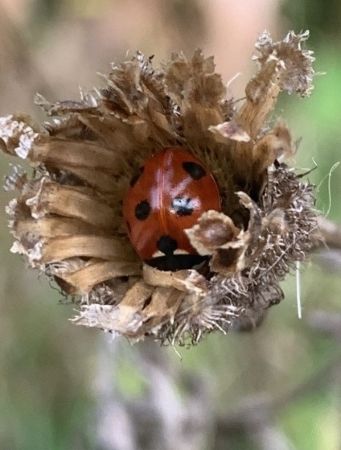
Ladybirds often spend the winter sheltering together in places such as conifers, old seedheads, and hollow plant stems, clustering together to stay warm. Various species can also be found on ivy, such as the 7-spot, 22-spot, and harlequin ladybird.
Bees have different ways of getting through the colder season. On milder days, you might spot buff-tailed bumblebees out and about, as this species is being seen flying more often during the winter months, and bumblebee queens may emerge from hibernation during these mild spells, while solitary bees leave their nests when they are ready to mate. For any bee active in winter, finding nectar is vital, as there is a real risk of starvation if food is scarce.
One of the simplest ways to help winter pollinators and other insects is by growing plants that flower during the colder months. Single-flowered hellebores are particularly useful because their open blooms make pollen and nectar easy to reach. Crocuses are another good choice, especially when planted in a sunny position where the flowers can fully open. Snowdrops and aconites also provide valuable food, while ivy offers both shelter and a late nectar source.
You don’t need to be a keen gardener to make a difference. Leaving fallen leaves where they land or creating small piles of twigs and leaves can provide important habitats for insects. And if you come across a queen bee that appears to be struggling, you can gently move her to nearby flowers or offer a 1:1 sugar and water solution.
Go a step further and record what you see!
Everyone can play a part in submitting wildlife observations to local Environmental Records Centres. They then appear on the “official record” that is consulted by planning authorities and used by other parties to track changes in distribution and abundance. Thames Valley Environmental Records Centre (TVERC) are always looking for people to submit the wildlife they see to add to their database.
Sharing single sightings
To submit details about a single or one-off sighting: use TVERC’s reporting form found on their website, or their recording app, iRecord.
You can also report one-off sightings via email: tverc@oxfordshire.gov.uk.
Multiple sightings
For multiple sightings, either use iRecord, another recording app and then email TVERC your results, or fill in their Excel template, found on their website.






Leave a Comment
Want to join the discussion?Feel free to contribute!