
Swan Upping Flotilla Glide into Town
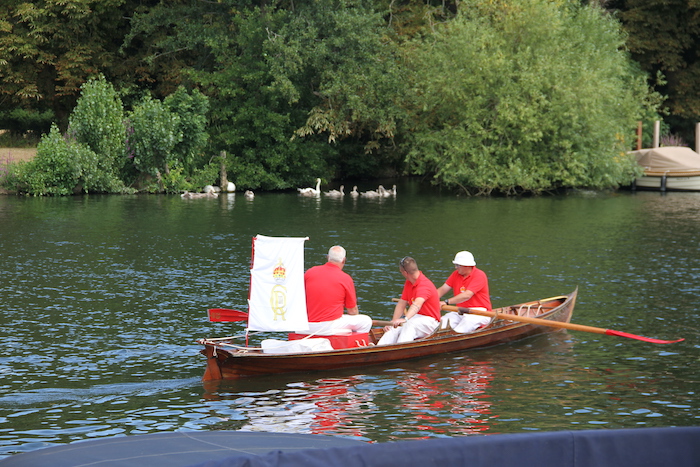
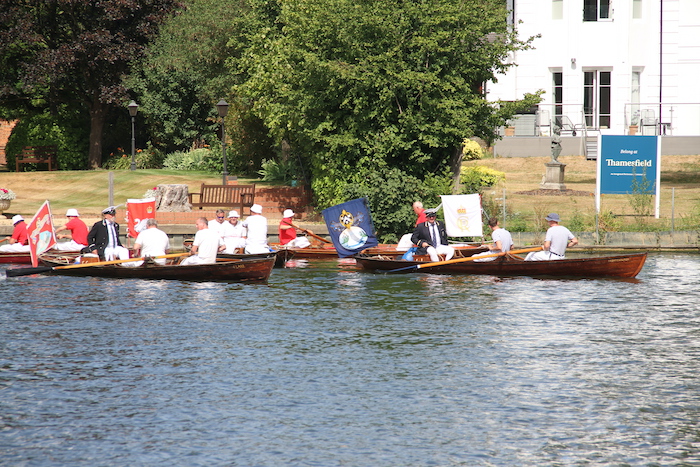

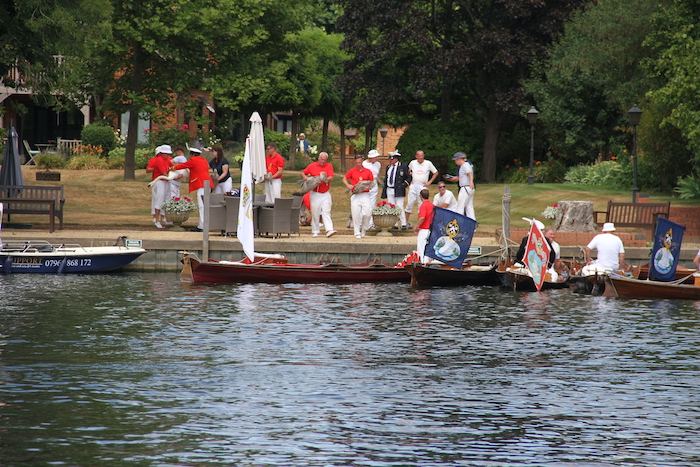
The King’s Swan Uppers rowed up the river and into town on Wednesday in their flotilla of skiffs to perform their traditional role of Swan Upping. Historically done to count and then fatten up to eat the prized birds, thankfully today the emphasis has changed to one of conservation and education.
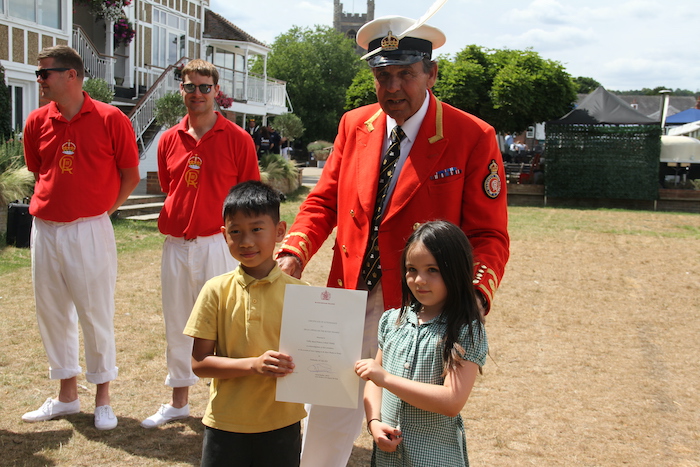
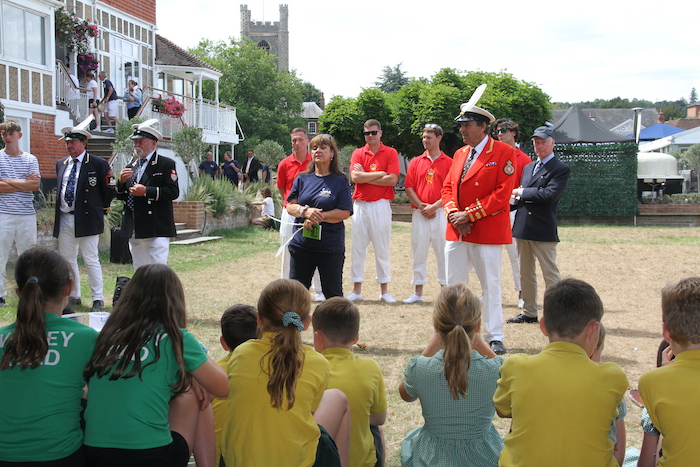
Having collected, checked and then released a family of swans and their cygnets at Fawley, the uppers progressed up the river to Leander Club, where they moored up to speak to children from Valley Road and Sacred Heart Primary Schools. All swans are owned by King Charles, with rites of ownership also being given to The Vintners and The Dyers – long standing livery companies. Each owner grants two traditional, clinker style skiffs to the flotilla, rowed by specially selected rowers dressed in their traditional Liveries – a privilege the Vintners and Dyers have had since the 1400s.
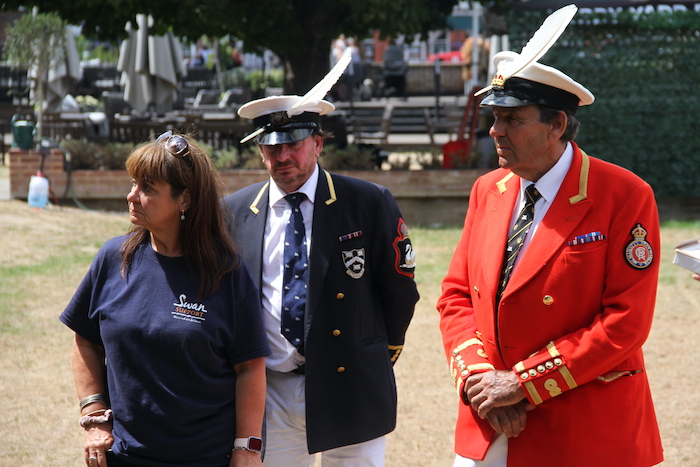
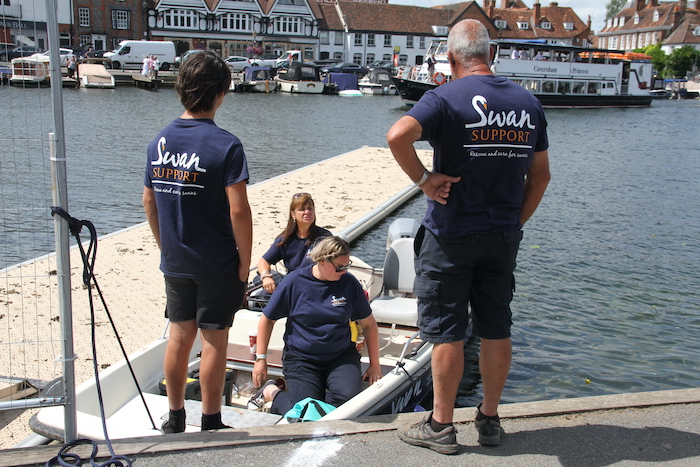
The flotilla is also accompanied by Swan Support, a voluntary organisation who work to treat and care for sick and injured swans within the Thames Valley and surrounding areas. There were also a number of small, powered boats to help the skiffs make the 79 mile journey from Sunbury to Abingdon in just 5 days – one of which had been a Dunkirk Little Ship in its past.
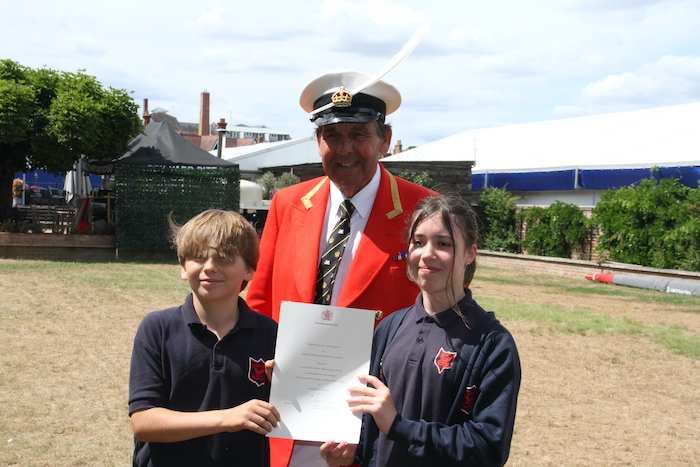
After disembarking from their boats, the King’s Swan Marker and Barge Master, David Barber, who has held the position for 32 years, spoke to the children. Resplendent in his Scarlet uniform, complete with hat sporting a mute swan’s feather, he explained all about swans and then invited the Swan Markers from Dyers and Vintners to continue on with information for the children on the boats and the river. Wendy Herman, from Swan Support then went on to explain the perils that swans face and what the children can do to help.
“It’s so important the we speak to the children and educate them to understand the importance of the birds but also the river and it’s ecology. It’s a vital part of what we do these days and we hope they will grow up to respect and look after it,” David explained.
In the last few years, avian bird flu has had an extremely detrimental affect on the population with the charity last year finding upwards of 300 dead birds between Reading and Marlow. However this year, the disease thankfully doesn’t seem to have the same grip and there have been no reported cases, resulting in the Upping figures looking much more promising currently. Wendy urged the children to look out for discarded fishing tackle – the main threat to swans who can become entangled or hooked by the equipment and to safely clear it up if they find it. The second biggest problem is litter and the children were surprised to hear that it was not uncommon for swans to use pieces of litter to make their nests.
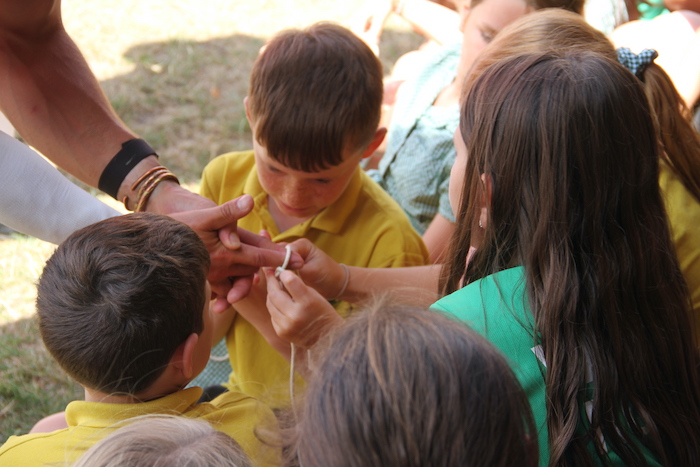
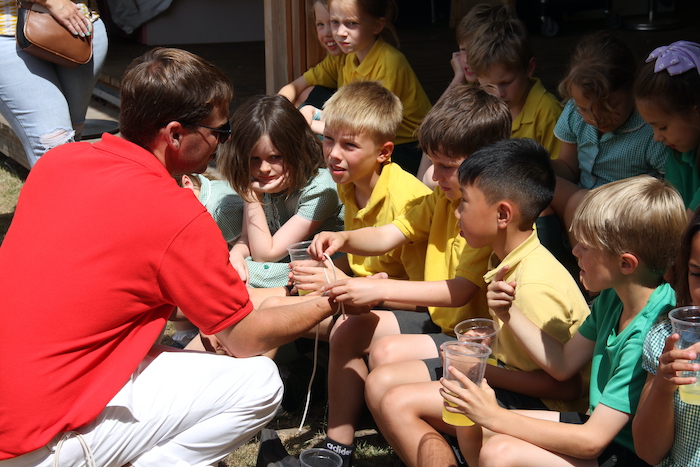
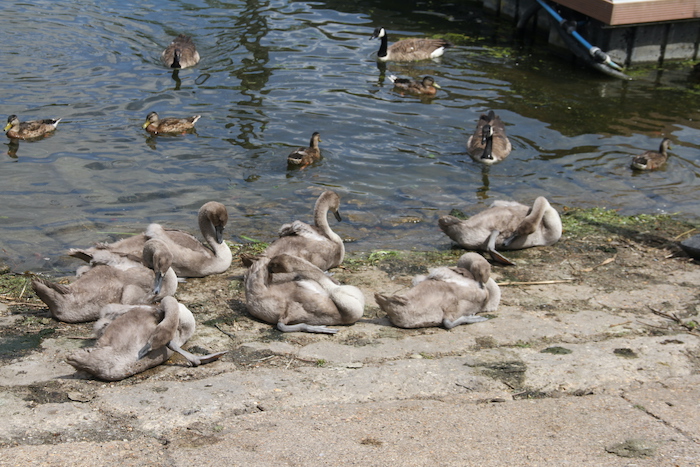
The children were also introduced to two young cygnets who are currently being looked after by the charity. They then worked with the swan uppers who showed them how to tie bows with rope – a skill they use to gently immobilise the swans legs whist they are monitored for the short time they are on the bank.
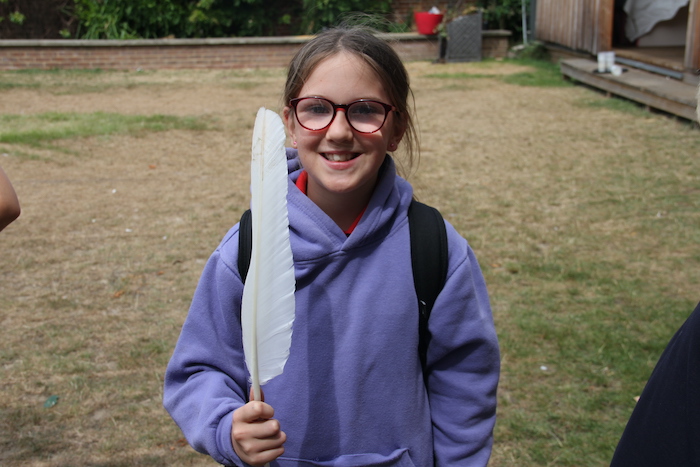
Hollie, from Year 6 at Sacred Heart said “We’ve been learning about the swan upping this morning in school and it’s great to come out and see them for real. The cygnets are sooo cute and fluffy and I got to touch one!” Ronnie, also from Sacred Heart, proudly clutched her swan feather, given to her by one of the Swan Uppers. The children were keen to show off what they had been learning in a quiz all about the birds and the process, with Logan, from Valley Road saying “It’s been really fun, I’ve loved coming to see it all!”.
After a late lunch in Leander Club, the Uppers were back on the river to count the swans that inhabit the area above the bridge. A crowd gathered to watch as the skiffs came together in an ever tighter circle, and the uppers gathered up the two parents and their nine cygnets. Landing in the garden next to the Thamesfield lawns on the opposite bank to Hobbs boat hire, the group carefully weighed and health checked the birds who remained calmly sat on the grass. The cygnets were then ringed. Depending on the rings the parents carry, the cygnets are fairly divided up between the King, the Dyers or the Vintners – a much kinder way of marking the birds than the traditional beak notching that used to be applied. When the process is completed, the Uppers then carefully release the healthy birds back onto the river, with any needing more treatment being taken to Swan Support. Thankfully for this family group, all 11 birds swam away unscathed and looking none the worse for their adventure.



Leave a Comment
Want to join the discussion?Feel free to contribute!